
For founders and CEOs who are tired of being the bottleneck.
Built from two decades of operating and scaling sales teams across Asia
Your revenue leaks in the same places every quarter. We find where, and we fix the system that lets it.
The five-minute reflection
The founder bottleneck is not a work-rate problem. It is a design problem. When decisions route through one person, growth is capped at that person's capacity. We build three systems, leadership, team development, and revenue, so execution holds without the founder in every decision.
Where revenue leaks in a founder-led company
Revenue rarely leaves through one dramatic hole. It leaves through the same quiet gaps every quarter, and nobody owns them.
- Deals stall at the same stage, because no two people agree on what qualified means.
- The forecast is built on optimism rather than evidence, so the number gets defended after the month closes.
- Decisions route back to the founder, so the team waits instead of moves.
- New hires take quarters to become productive, because onboarding is improvised each time.
- Accountability lives in conversation, not in a named owner, so follow-through depends on who is in the room.
None of these are talent problems. They are structural. The people are usually capable. What is missing is the design that lets that capability show up consistently.
The three systems, and what each one fixes
Revenue System fixes how deals are qualified, advanced, and forecast. It puts discipline into the pipeline and the cadence, so performance stops depending on a few individuals. Explore the Revenue System.
Team Development System fixes how expectations are set, how capability is built, and how managers coach. It is what stops results landing back on your desk. Explore the Team Development System.
Leadership System fixes where decisions sit, how accountability is structured, and how the leadership cadence runs. It is what stops every decision routing through you. Explore the Leadership System.
Each system is applied inside your live business, in your accounts, your pipeline, and your meetings. There is no off-site to attend and nothing to translate back on Monday.
Who this work is for
- Founder-CEOs and owners of companies of 20 to 200 employees, where the buyer and the user are the same person.
- Leaders based in Hong Kong, Singapore, or elsewhere in Asia Pacific.
- Successors, sales leaders, and department heads who own a number.
- Businesses with real revenue, a live team, and performance that varies too much from one person or one period to the next.
Who this work is not for
- Pre-revenue businesses, or anyone still searching for the first repeatable sale.
- Teams looking for a one-day course, a scripted methodology, or a motivational reset.
- Companies that want a new title on the org chart without changing how the team works week to week.
- Leaders who want someone else to run the business, rather than build the system that runs it.
How an engagement begins, and how it deepens
It starts with a fit call, about 30 minutes, no pitch. We are checking whether there is a fit, in both directions.
If there is, the next step is the paid Growth Review: 90 minutes, USD 500, fixed. We look at your business before we meet, then name the constraint in writing within 48 hours.
From there, the work is scoped to what the diagnostic surfaces. That may be a Revenue Audit, a system engagement, or fractional sales leadership inside your live pipeline. We do not sell a package before the problem is clear, and most engagements run around 12 months once it is.
What the paid Growth Review is for
The Growth Review is the paid diagnostic that starts the work. It is not a free discovery call and it is not a pitch. One session, 90 minutes, USD 500, live with Jerald. You leave with the constraint named and a first move to make on it. If you go on to a larger engagement, the fee is credited in full. See what the Growth Review covers.
“If you're running your business alone and know you're the bottleneck, it's worth the conversation.”
Beverly · Founder, Books & Brains Literacy & Maths · Hong Kong
Proof
One pilot became a three-market rollout.
A global S&P 500 technology company brought us in for one sales pilot. We measured honestly, told them the first result was good, not great, and fixed the system. The next cohort's results took it across Asia Pacific.
Read the case study Five practical guides on decisions, accountability, and executionWhat this is not
Not sales training.
Your team does not have a skills gap. They have a system gap. Training decays in six weeks. Systems compound.
Not a deck.
A deck is not an operating system. When the engagement ends you should have something running, not something read.
Not a mastermind.
You do not need another room of founders. You need your Tuesday pipeline review to work without you in it.
Every system we build stays in your business, in your language, run by your people.
Founder
Jerald Lee
Operator turned systems builder.
Commercial Systems Advisor.
Twenty-two years in corporate, including 13 at Google in leadership and commercial roles across Asia Pacific, where he ran country-level revenue operations and interviewed over 400 candidates for sales and leadership roles.
He has worked inside revenue teams at every stage of growth. What he observed, consistently, was the same pattern: execution breaks as companies grow. Decisions concentrate at the top. Performance becomes dependent on who is in the room. Pipelines look active but conversion is uneven.
These are not people problems. They are system problems. The talent is usually there. What is missing is the structure that lets it operate consistently.
The work now is system design: building the decision frameworks, sales processes, and leadership structures that allow organizations to perform without depending on constant leader intervention. This applies to B2B sales teams, revenue leaders, and organizations scaling past the point where informal coordination still works.
Design the system. Execution follows.

From Senior Leaders at a Global Technology Company
“Through disciplined planning and prioritization, Jerald focused the team on investing for the future during the Covid crisis, which paid off and led the Singapore business to accelerate faster than the rest of Southeast Asia. This resulted in very low attrition and high motivation in the team.”
“Jerald was a very valuable thought partner on a number of key decisions. He was always able to provide a well-balanced perspective, but also had an opinion. It can be rare to see a leader who is so balanced in considering inputs while still able to make the tough call and hold firm.”
The Problem
Where execution breaks as teams scale
Execution becomes inconsistent
The same situation produces different decisions across the team. Outcomes vary even when effort is high.
Decisions concentrate at the top
Leaders get pulled back into deals, approvals, and edge cases they thought were already delegated.
The numbers lose credibility
Pipelines look full, but conversion is uneven. Forecasts rely on judgment instead of signal.
This is not a talent issue.
It is how decisions are made, and where they sit.
If this pattern sounds familiar, this piece breaks down why it happens.
Trusted by Leaders
What leaders say
“The coaching helped me reposition myself from being execution-focused to becoming a more intentional, strategic leader, and gave me a deeper understanding of what it means to build, grow, and inspire a team, beyond just numbers and metrics.”
Regional Head of Marketing
Clean-energy retailer, Singapore & Australia
“Jerald constantly empowers me with a consulting approach, helping me look at issues differently, advising where to focus for greatest impact, and relating to on-the-ground sales challenges with real solutions.”
Sales Manager
Technology sector
“The sessions were never generic. When I brought a real problem, a business plan, a stuck newsletter, a tough client conversation, Jerald asked a few pointed questions and I'd leave with an actual next step.”
Beverly, Founder
Books & Brains Literacy & Maths, Hong Kong
Prefer measured results over quotes? One engagement, three markets, tracked cohort by cohort. Read the case study →
What You Will Walk Away With
What you get back
Decisions stop coming back to you, ownership is named, and it sticks
A system your team runs without you chasing it
You see execution slipping before it costs you the quarter
The business holds its shape when you step away
How We Work
A different way to run the business
Most teams try to improve performance by pushing harder on execution.
More activity
More oversight
More involvement
It works. Until the leader becomes the bottleneck.
The Systems focus on something else.
Not activity
Not motivation
Decision quality
Each System is applied directly to how the business is operating: decisions, pipeline, and leadership cadence.
Through a regular cadence, we look at
What decisions are being escalated and why
Where judgment is inconsistent
What signals are being used or ignored
How trade-offs are being made under pressure
From there, we redesign
Decision rights
Accountability structures
Operating rhythms
You are not stepping out of the business to learn. You are working on the business while it is running.
Format
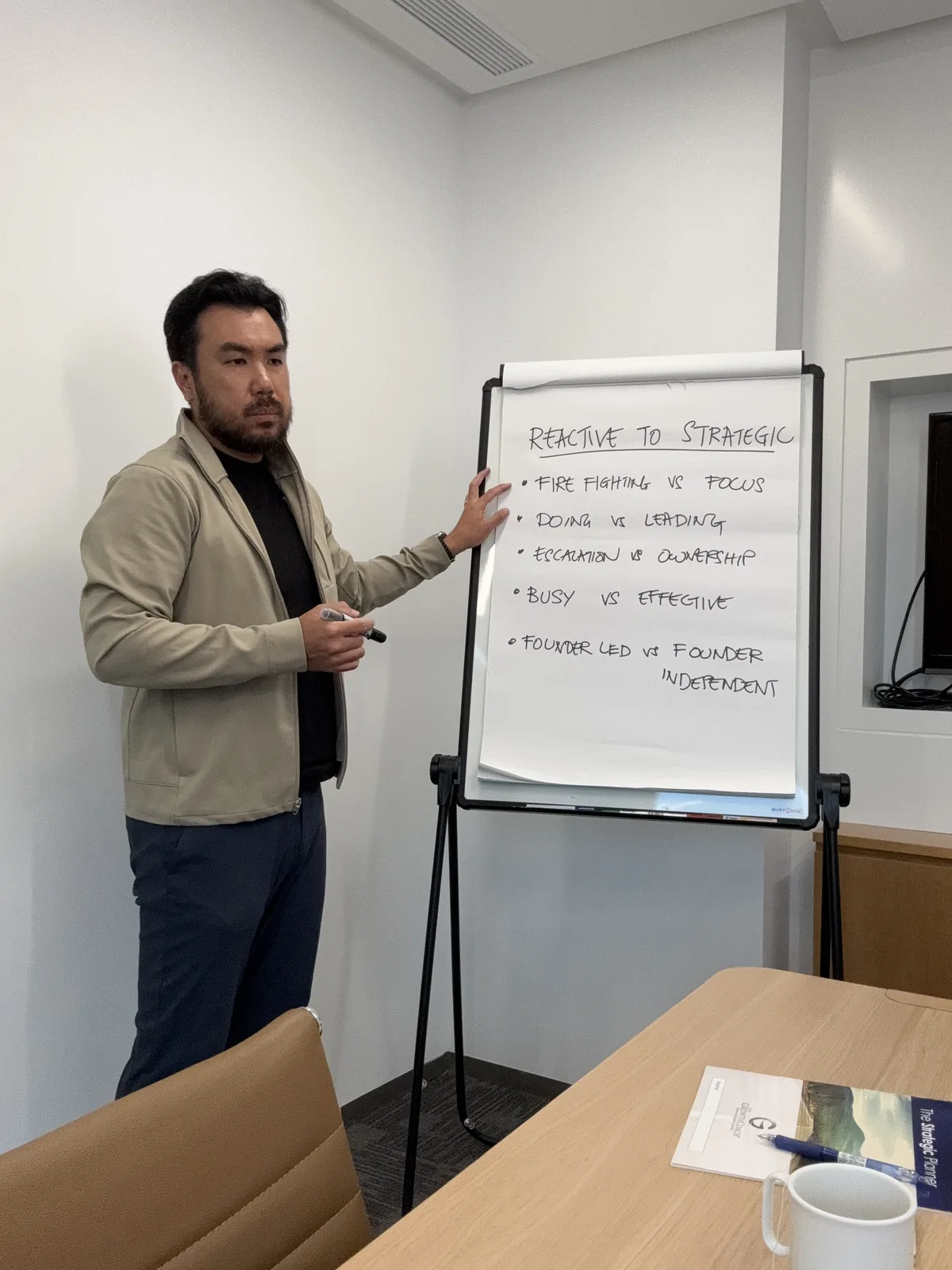
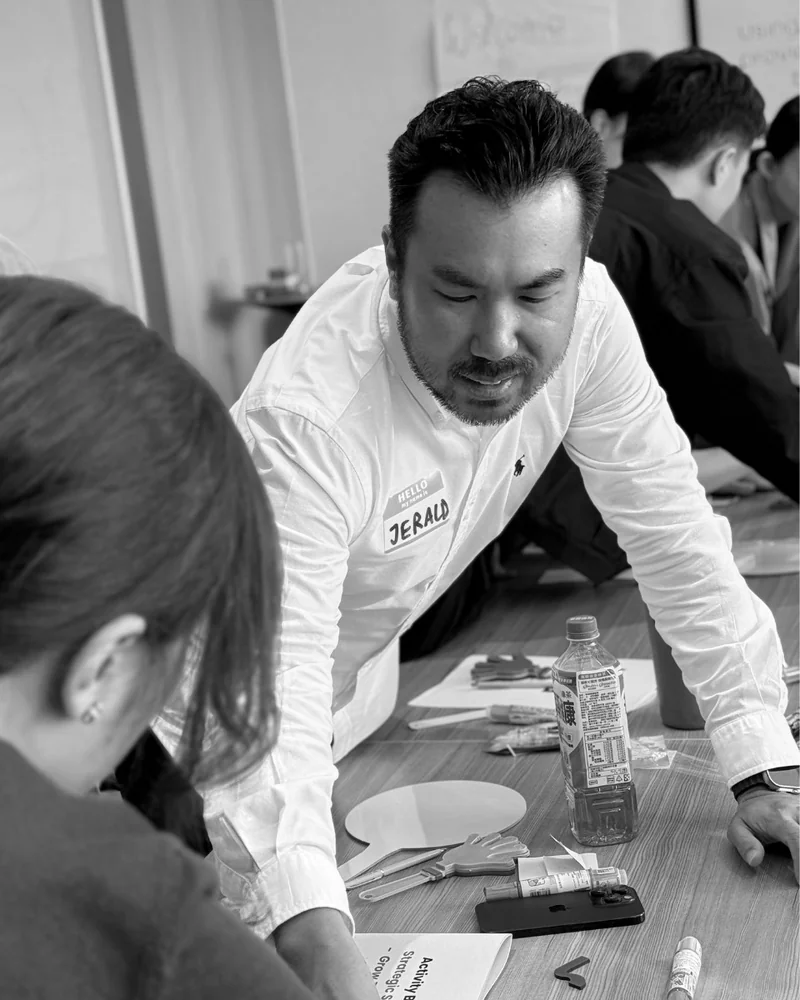
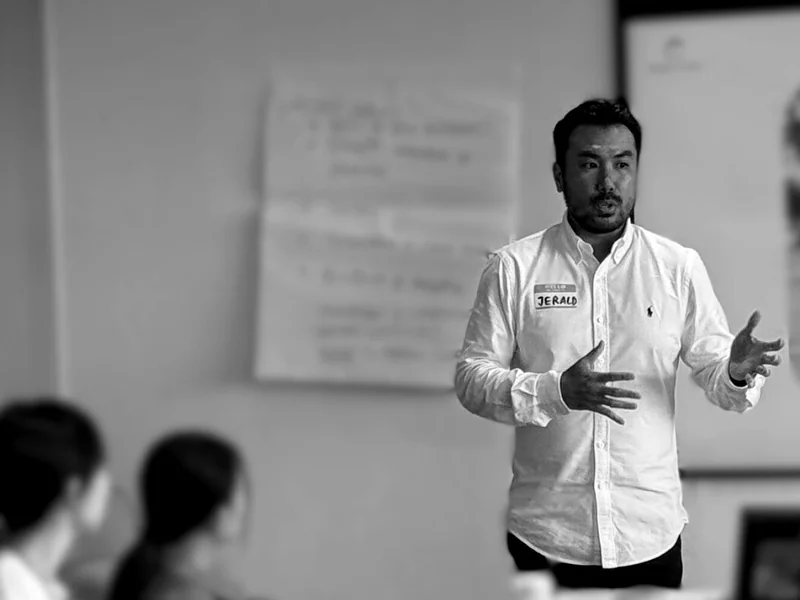
Structured engagements applied inside your business, with implementation support.
Applied directly to your business over multiple weeks.

Going Deeper
How the work deepens
The starting point is always the same. Working directly on how the business is currently operating.
As patterns become clear, the work extends. Not into theory. Into the system itself.
Where the Systems Focus
As the engagement progresses, it concentrates in specific parts of the system. These are the most common areas.
Revenue system
For teams where revenue exists, but performance is inconsistent and not yet repeatable.
Focus
How opportunities are qualified and advanced
Consistency across the full sales cycle
Forecasting and performance visibility
Repeatable execution across the team
Format
The work is applied within active deals, pipeline, and sales cadence, shaping how teams execute from first conversation through to close.
Team development system
For teams where leaders execute tasks but do not consistently own outcomes.
Focus
Building judgment across the team
Strengthening ownership at the right levels
Consistency in execution
Format
The work extends across leadership teams, aligning how decisions are made and executed in real situations.
Leadership system
For organizations where decisions concentrate at the top and slow execution.
Focus
Decision ownership and rights
Reducing escalation
Alignment across leadership
Format
The work is centered at the leadership level, applied directly to live decisions and operating cadence.
Where the work concentrates isn't predefined, it follows where decisions break down and where performance depends on you personally.
Some organizations stay at the leadership level; others extend across teams.
The objective never moves: execution that holds without you.
From the Insights Library
Start with what's resonating most
Get in Touch
Start a conversation
This starts with a direct discussion about how your business is currently operating. Where execution breaks down, where decisions escalate, and what is limiting consistency.
No pitch. No generic discovery.
Just a clear look at what is actually happening inside the system.
Or Send a Message